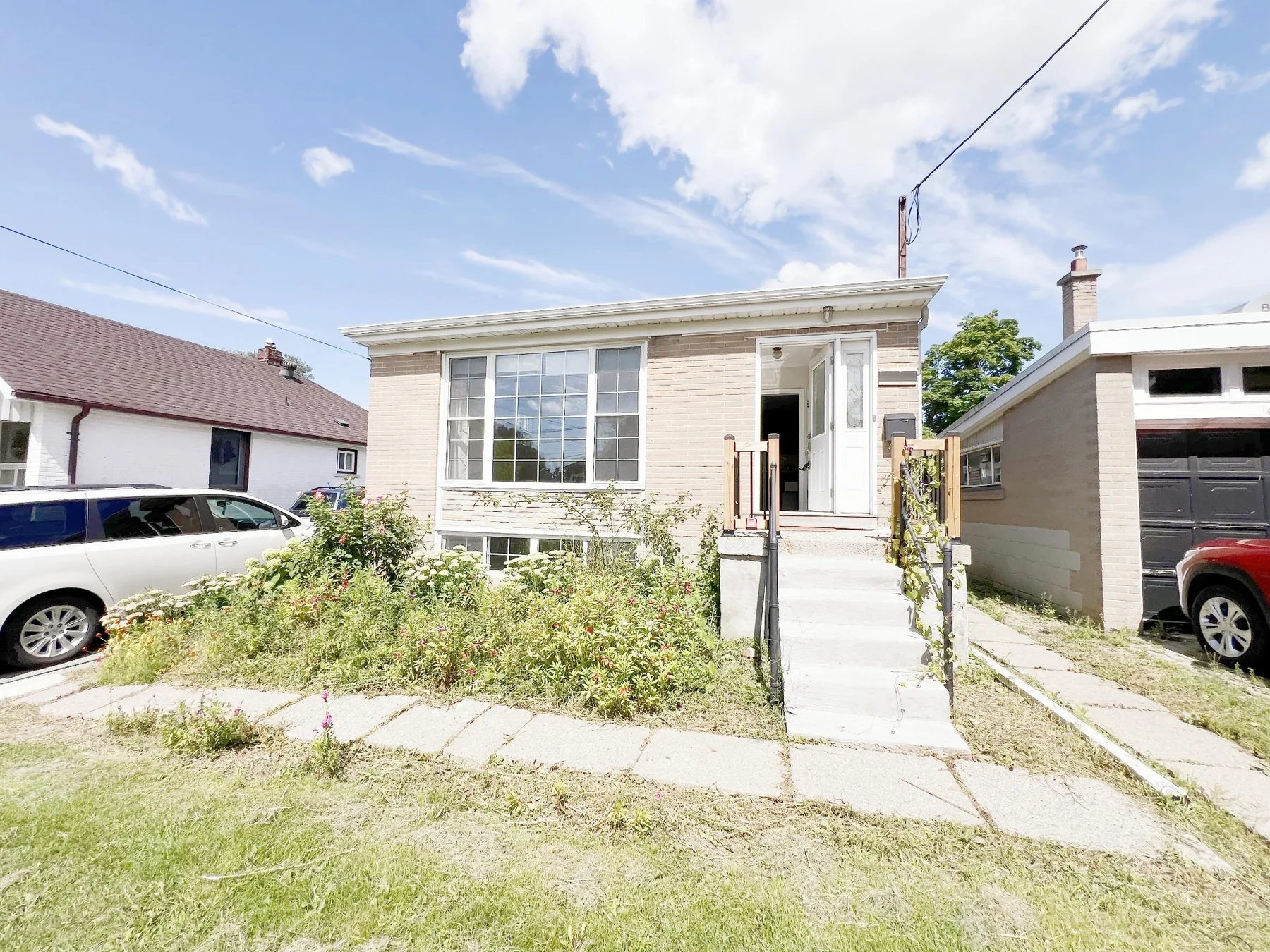
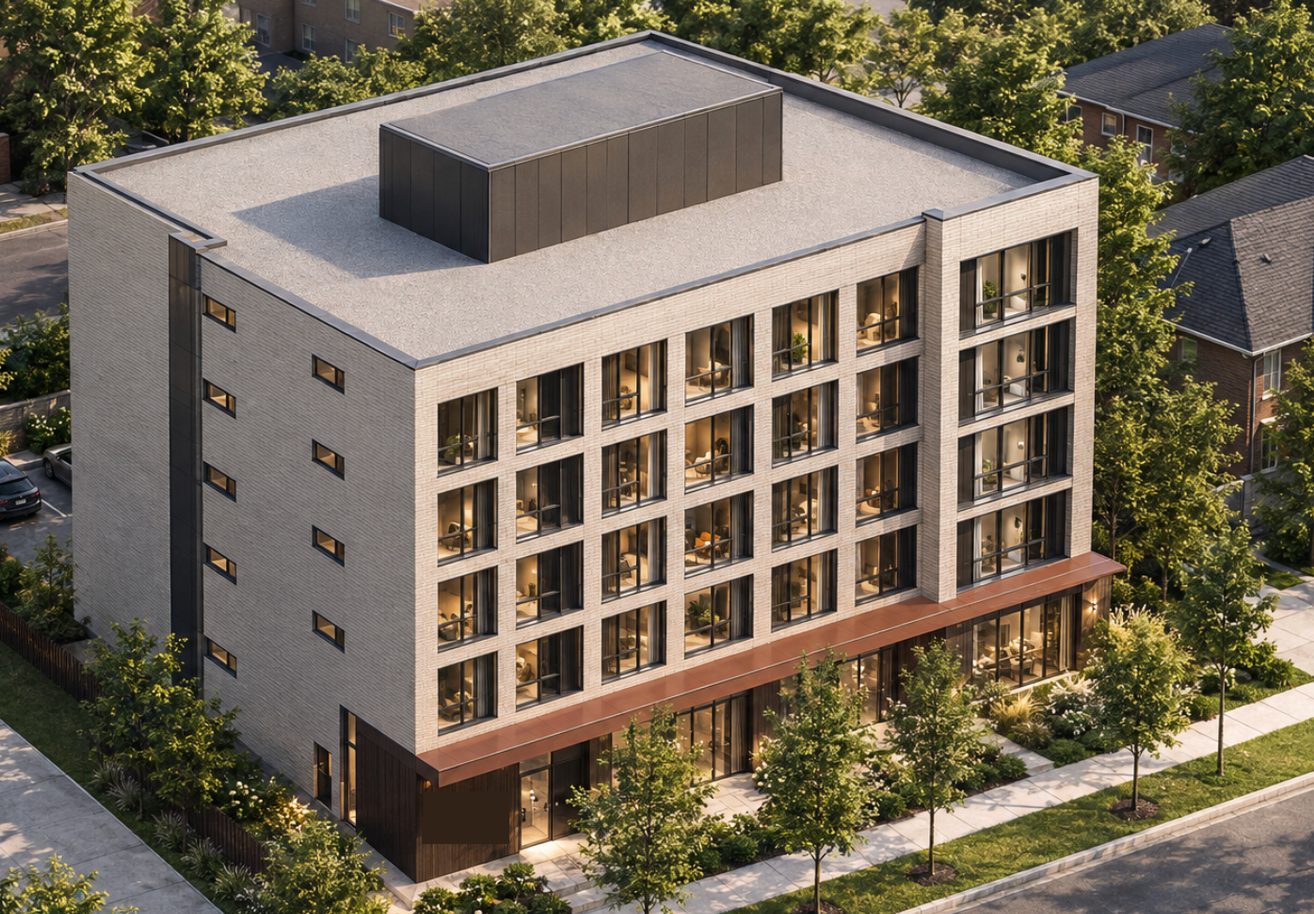
For homeowners sitting on a large lot with an aging house, the biggest question may not be whether to renovate or sell. It may be whether the property could support something more valuable.
Across Toronto, changes to zoning and rental-housing financing have made multiplex development increasingly accessible. For the right property, an underutilized single-family home can potentially be transformed into a small, income-producing residential building, creating a very different investment profile from simply maintaining the existing house.
Two policy frameworks are particularly relevant: Toronto’s Expanding Housing Options in Neighbourhoods (EHON) and CMHC’s financing programs for rental housing.
From one home to multiple income-producing units
Toronto’s EHON initiative has changed what can be built in many residential neighbourhoods. The policy was designed to create more “missing middle” housing — including multiplexes, garden and laneway suites, and small-scale apartment buildings.
For property owners, the significance is less about the policy itself and more about what it can mean for the underlying land.
A property that currently contains one aging home may have the potential to accommodate several rental units, depending on the lot’s characteristics, zoning, and applicable regulations. Instead of generating value from a single residence, the property can potentially become a small rental asset with multiple sources of income.
Toronto’s zoning changes adopted in 2023 permit multiplexes in many low-rise neighbourhoods, with additional permissions in certain areas. Where a project qualifies as “as-of-right,” owners can generally proceed through the building-permit process without rezoning or a minor variance, provided the proposal meets all applicable requirements.
That predictability can be important when evaluating a development opportunity. The fewer discretionary approvals a project requires, the easier it becomes to assess its timeline, costs, financing, and potential returns before committing significant capital.
The numbers matter more than the policy
Zoning creates the opportunity, but the investment case comes down to the numbers.
A multiplex project needs to work across several variables:
- Land value
- Construction costs
- Development charges and other municipal costs
- Financing costs
- Number and size of units
- Expected rental income
- Operating expenses
- Stabilized property value
This is where a property that looks ordinary from the street can become interesting from a development perspective.
The same lot can have very different economics depending on how efficiently it can be used. Adding units does not automatically make a project profitable; the design, construction cost, financing structure, and resulting rental income all need to work together.
For homeowners, this also changes the way a property can be viewed. The existing house is not necessarily the full value of the property. The land may have substantially more potential than the current building reflects.
Financing can change the development equation
Construction financing is another major part of the investment equation.
CMHC-insured financing programs are designed to support the development and long-term financing of rental housing. Depending on the project and its eligibility, financing can provide significantly more leverage than conventional residential lending.
Programs such as MLI Select can offer extended amortization periods and financing incentives tied to factors such as affordability, energy efficiency, and accessibility. These features can reduce monthly debt service and, in turn, affect the project’s stabilized cash flow.
For a development project, this matters because the financing structure is closely connected to the property’s eventual income. A project may have a very different cash-flow profile under a conventional mortgage than it does under long-term CMHC-insured financing with a longer amortization period.
However, eligibility is not automatic. Unit count, property type, affordability, energy efficiency, accessibility, loan-to-cost, premiums, and other program requirements all need to be considered when building the financing model.
Unit count can make a significant difference
One of the most important considerations when evaluating a multiplex opportunity is how many units the property can realistically support.
Toronto’s zoning permissions and CMHC’s rental-housing financing programs operate under different rules. A project may be permitted from a zoning perspective but still require a different financing strategy depending on its final unit count and configuration.
This is why development feasibility should be considered as a whole rather than looking at zoning, construction, or financing separately. A property should ideally be evaluated from the beginning across:
- Land
- Zoning
- Design
- Construction
- Financing
- Rental income
- Long-term value
A change at one stage can materially affect the others.
What this means for a homeowner
For someone with an older house on a suitable lot, there are now more options than simply renovating the existing home or selling it.
A homeowner could potentially unlock additional value by redeveloping the property into a modern multiplex, retaining an income-producing asset rather than simply selling the land.
The important question is not simply “Can I build a multiplex?” It is:
What can this property become, and does the development make financial sense?
That requires looking beyond the existing house and evaluating the property as a development opportunity.
At Kplex, we approach multiplex development from that perspective — combining property evaluation, design, construction, financing, and rental economics to determine how a property can be transformed into a long-term income-producing asset.
For homeowners, the goal is simple: unlock the value that may already be sitting in your property.
Old house → New multiplex → New income.